Source: Graana.com
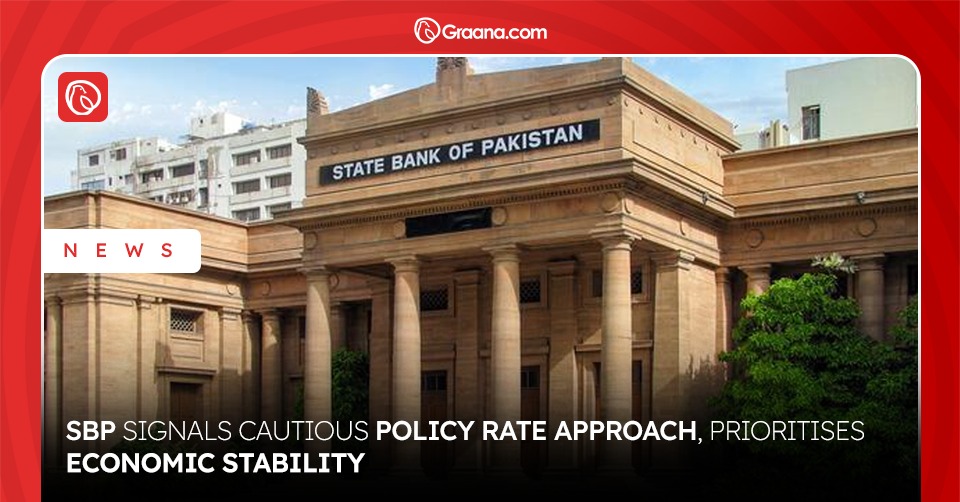
Karachi: The State Bank of Pakistan (SBP) has indicated that it will maintain a cautious monetary policy stance and is unlikely to pursue aggressive interest rate cuts, despite calls from the prime minister for stronger easing measures.
SBP Governor Jameel Ahmad said the country has moved beyond the most severe phase of its economic crisis and entered a period of relative stability, marked by improving external accounts, moderating inflation and strengthening foreign exchange reserves. He added that this stability is expected to continue for the next two years.
The governor noted that the central bank has completed the initial phase of its economic stabilisation programme and will now focus on supporting development finance initiatives aimed at promoting sustainable growth and boosting productive sectors. However, he warned that sharp reductions in the policy rate could reignite inflationary pressures and reverse recent macroeconomic gains.
Key economic indicators show notable improvement. The current account deficit, which reached 4.7 percent of GDP in 2022, shifted into surplus in 2025, largely driven by strong remittance inflows, and is projected to remain between zero and one percent of GDP. Inflation has stabilised within the 5 to 7 percent range, while foreign exchange reserves have strengthened even as imports rose to around $6 billion per month.
Export performance remains mixed. Non-food exports have grown by about 5 to 6 percent, but rice exports declined sharply by 47 percent during July to December of FY2026.
To support exporters and industrial activity, the government has introduced several measures, including lower electricity tariffs, adjustments to the Export Finance Scheme and special travel facilitation measures for leading exporters.
On the issue of reliance on the International Monetary Fund, Ahmad said future engagement will depend on maintaining fiscal discipline. Pakistan’s ongoing $7 billion Extended Fund Facility programme is expected to conclude by late 2027.
He also clarified that lower policy rates do not necessarily reduce the government’s interest burden, as they also decrease the central bank’s earnings from monetary operations. The SBP transferred Rs2.4 trillion to the government last year, a figure expected to decline to around Rs2 trillion this year due to lower interest rates.
The Pakistan Engineering Council and the Capital Development Authority have agreed to collaborate on raising…
Feb 7 (Reuters): Saudi Arabia on Saturday unveiled a wide-ranging investment package for Syria covering…
Islamabad: The Federal Board of Revenue (FBR) has issued revised valuation rates for immovable properties…
Riyadh: Saudi Arabia has completed what it described as a global first in capital market…
Rawalpindi: The Rawalpindi Development Authority (RDA) has introduced strict safety measures for all construction sites…
Islamabad: The Securities and Exchange Commission of Pakistan (SECP) has registered three new Real Estate…
Welcome to Graana Blog - Pakistan’s Smartest Property Portal!
For more than a decade our intention has been to revolutionise the real estate industry in Pakistan. The same belief drove the vision of our real estate team, Graana where quality beats quantity.
We have introduced an extremely transparent and purposeful portal where we will help you buy, rent or sell your property. A place where you can sit back relax and let us market your projects and listings. We believe we have set new standards for the future of real estate in Pakistan by providing the smartest property portal.

