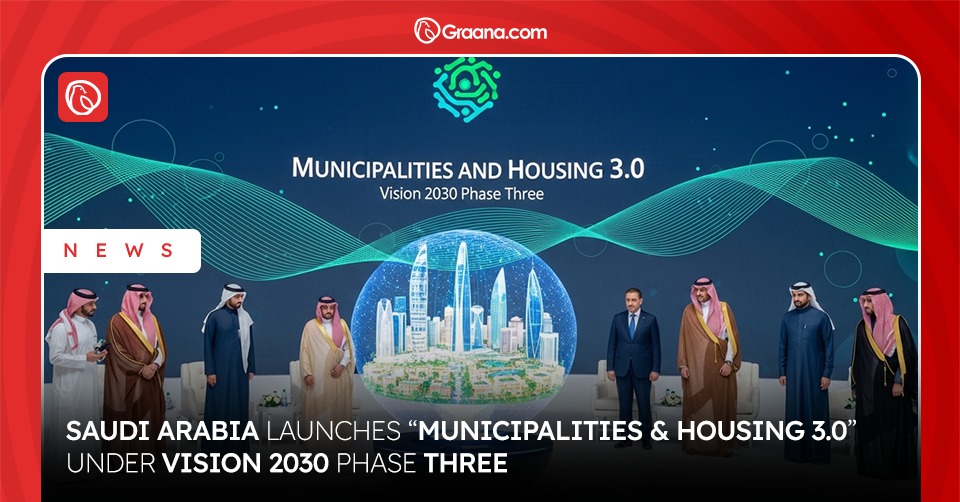
Riyadh: As Saudi Arabia’s Vision 2030 enters its third phase for the period 2026–2030, the municipalities and housing sector is undergoing a major transformation, shifting from traditional service delivery to a comprehensive, data-driven development model focused on human well-being, partnerships and social impact.
Speaking at the 32nd government press conference hosted by the Ministry of Media, Minister of Municipalities and Housing Majed bin Abdullah Al-Hogail said the sector has evolved into a central driver of national development. It now connects government institutions, the private sector, nonprofit organisations and civil society within a unified ecosystem aimed at improving quality of life and economic sustainability.
Al-Hogail highlighted the importance placed on family stability under the directives of Crown Prince Mohammed bin Salman. This priority was reflected in the crown prince’s personal donation of SR1 billion ($270 million) in 2025 to the Developmental Housing Foundation (Sakan) through the Jood Eskan platform, aimed at expanding homeownership opportunities for vulnerable families.
The minister cited significant progress across the sector, including the participation of 313 nonprofit organisations, 345,000 volunteers and support provided to more than 106,000 beneficiaries. Since 2021, community contributions have exceeded SR3.8 billion, while approximately 200,000 individuals have been protected from homelessness. These initiatives align with Vision 2030’s goal of increasing the nonprofit sector’s contribution to GDP to 5 percent.
Digital transformation has become a key decision-making tool rather than merely an administrative upgrade. Authorities have reduced the resolution time for distressed cases from one month to 19 days and shortened the homeownership process from 14 days to just two days. In 2025 alone, more than 150,000 digital transactions were completed, while integrated national databases were used to assess the needs of 400,000 beneficiaries.
The Jood Eskan platform, initially created to support 100 families, now serves around 50,000 households and has attracted 4.5 million donors, generating contributions exceeding SR5 billion. Officials say this demonstrates how structured, technology-enabled charitable work can evolve into a sustainable social economy.
Similar approaches have been applied to other initiatives, including the Jood Ikram Al-Mawta platform, which coordinates services through dozens of nonprofit organisations and maintains a national database of cemeteries and related facilities.
Al-Hogail also outlined progress under the Real Estate Market Balance programme, which aims to enhance transparency and stability in the property sector through data-driven oversight. The Real Estate General Authority plans to introduce key market indicators this year, including vacancy rates, rental inflation, rent-to-income ratios and sustainable price trends. These measures are intended to guide policy decisions, regulate rental markets and support both investors and tenants.
Officials described the current phase as a comprehensive restructuring of the sector’s role in national development. While the first phase of Vision 2030 focused on construction and the second on empowerment, the third phase emphasises institutional sustainability, turning initiatives into long-term systems supported by partnerships and specialised entities.
Key priorities include allocating a significant share of municipal assets to private sector participation, expanding the economic role of nonprofit organisations and strengthening institutions such as Sakan to deliver housing solutions.
Authorities said the approach represents a fully integrated model in which the government regulates, the private sector delivers services, nonprofits provide support and citizens actively participate. Regular public briefings and press conferences are also seen as tools to enhance transparency, build trust and attract domestic and international investment.